Reaffirming the principles of a library-powered people-centred internet – WSIS+20 High-Level Meeting
18 December 2025
United Nations Member States have endorsed by consensus the outcome document of the WSIS+20 High-Level Meeting. This both maintains a focus in general on ensuring that the internet serves development goals, and specifically highlights the role of libraries.
The World Summit on the Information Society (WSIS) agenda stands out among work in the UN space around the internet for its focus on development. The original priorities, set out between 2003 and 2005, make clear the need for the internet to work for science, education, culture, broader inclusion and more.
Over the past two years, an intensive process of stock-taking, reporting and discussion has taken place, leading up to the 20th anniversary of WSIS in 2025. This has been an opportunity to look at how technological change is interacting with wider policy goals, and in particular to highlight and celebrate how libraries have evolved their practice to support digital inclusion.
This work came to a conclusion in New York on 16-17 December 2025, with side-events already taking place from 15 December, and IFLA representatives taking place throughout.
An essential infrastructure for localising digital inclusion efforts
Throughout the Meeting – and indeed in the run up to it – IFLA’s core message was that we cannot achieve digital inclusion through top-down initiatives alone.
While there has been major success in bringing more people online – around 8x more people are connected to the internet now than in 2005 – this has not always translated into change in people’s lives.
First of all, meaningful connectivity is increasingly recognised – including by the outcome document – as also being about skills, confidence and access to content.
Secondly, the process of helping people to get online and turn this into real-world positive results requires a localised approach, based on proximity and adapting to needs.
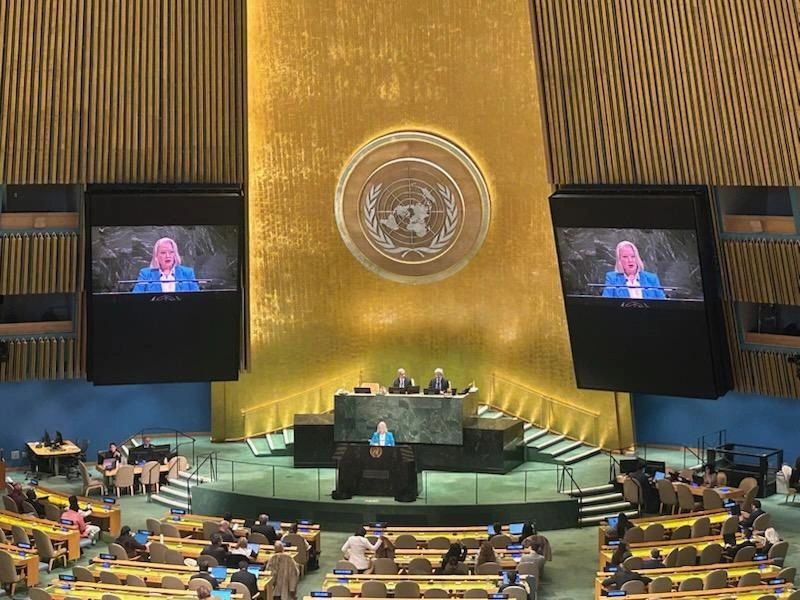
This point was at the heart of IFLA’s intervention in the plenary session, delivered by Governing Board member Professor Lisa Janicke Hinchliffe. In this, mirroring the Global Digital Compact agreed last year, she argued that libraries were at the heart of the millions of local digital compacts necessary to make a reality of WSIS goals.
Growing recognition of the urgency of information integrity
Access to relevant content and services is an essential pillar of meaningful connectivity. However, global concern is growing about the volume of misleading, false or harmful content that is circulating online.
Last year, the UN elevated the concept of Information Integrity to the global level with its Global Principles. It underlined the importance of access to accurate, reliable and verifiable information for social cohesion, the upholding of human rights, and the effectiveness of policy.
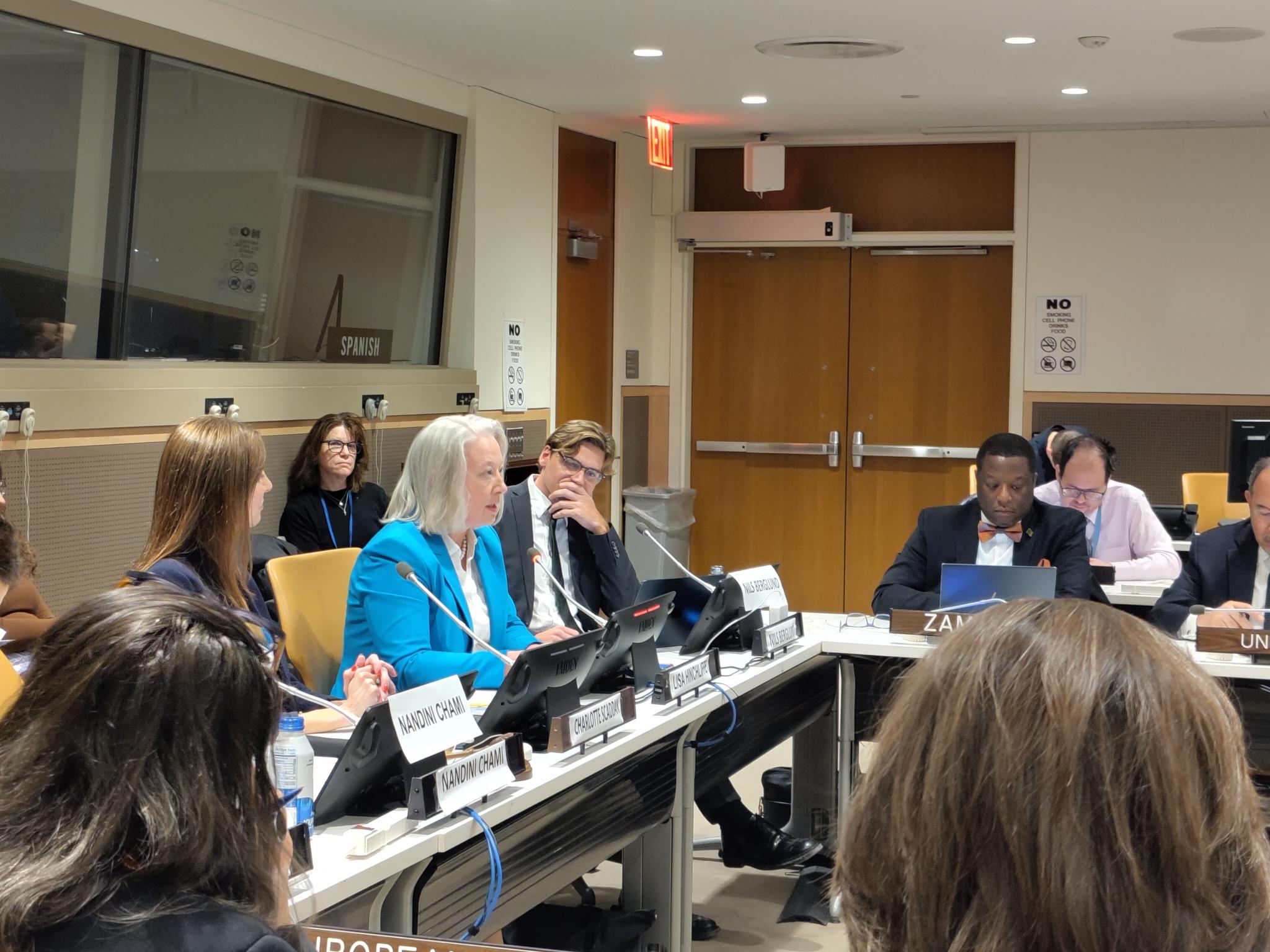
A dedicated side event allowed for an exploration of the landscape today. Strong concerns remain about the practices and business models of online platforms, and the risk of generative AI intensifying challenges. Similarly, the need to support independent quality journalism was clear.
IFLA’s intervention once again highlighted the need not to limit work here to top-down, ‘supply-side’ efforts. To succeed, it is vital to engage and mobilise libraries in order to localise information integrity efforts, drawing on their potential as safe spaces for learning and experimentation.
Libraries recognised – a basis for further advocacy
There is plenty to be done, and plenty of potential for libraries to contribute. As was underlined in IFLA’s side-event, organised jointly with UNESCO’s Information for All Programme and the ALA SDG Task Force, this will require our work to be recognised and supported, and librarians to be at the table when plans are being made.
An important support for this is the fact that libraries are recognised in the WSIS outcome document, in paragraph 27. The same document also recognises the importance of supporting capacity for science and research, as well as the value of access to heritage.
This reference should provide a basis for libraries everywhere to approach their governments, and start a conversation about what more can be done to realise our potential to achieve digital inclusion.
We are grateful to our volunteer representatives – IFLA Governing Board members Loida Garcia Febo and Lisa Janicke Hinchliffe, as well as Damilare Oyedele and Diana Price. Thanks also to the Gates Foundation, via SIGL, whose financial support made our participation possible. Look out for our summary video!